
Laparoscopic Cancer Surgery In Patna, Bihar
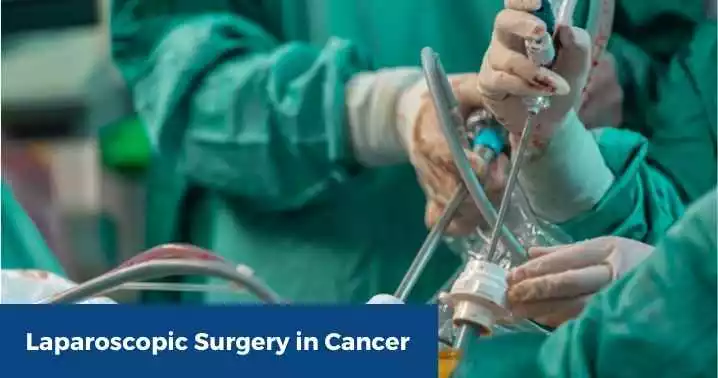
Surgery for cancer usually involves tumor manipulation and removal. Laparoscopic (minimally invasive surgery) is now standard for several benign and malignant cancers.
Minimally invasive approaches for resection of several types of cancers are growing exponentially. It has transformed the field of abdominal and thoracic surgery.
It is one of the most important innovations in the last few years that has changed surgery practice entirely. Surgeons have developed this novel approach to minimize suffering and at the same time improve outcomes.
What is Laparoscopy?
Laparoscopy is a surgery that utilizes tiny cuts to operate on the affected area of the body. Laparoscopy is also termed minimally invasive surgery or keyhole surgery.
During this procedure, the doctor uses a laparoscope (a thin, metallic tube with a light and a small video camera in the end) to look inside the abdomen (belly) and chest cavity. This tube is inserted inside the body through a small cut made through the abdominal wall near the belly button.
A few more small cuts ( 5-12mm) (incisions) will be required in other parts of the abdomen to insert other instruments required for the surgery.
Use of Laparoscopic Surgery in cancer treatment
A Laparoscopic expert surgeon performs Laparoscopic surgery to treat a variety of cancers.
Types of cancer treated with Laparoscopy
- Gynecological cancer:
- Ovarian cancer
- Endometrial cancer
- Cervical cancer
- Digestive system cancers
- Oesophageal cancer
- Gastrointestinal cancer
- Colon cancer
- Rectal cancer
- Others
- Kidney cancer
- Bladder and prostate cancers
- Mediastinal tumors
- Lung tumors
How is Laparoscopic Surgery for cancer performed?
In a typical laparoscopic surgery, a few tiny holes, also called as ports, are made on the abdominal area. A specially designed slender high resolution camera is inserted through one of the holes. A magnified view of the insides of the abdomen is projected on a high-definition monitor.
The other ports are used for putting specially designed thin and long instruments. While looking at the monitor, the surgeon deftly maneuverers the instruments to remove the tumors.
For all the cancers, the tumor-affected part of the organ is removed, along with surrounding tissues and lymph nodes.
Benefits of Laparoscopic surgery
Minimally invasive surgery, or keyhole surgery, is beneficial for the patient in many ways. This surgery does not require making major cuts in the abdomen to access the tumors. Post-operative pain and stress are markedly reduced, leading to a quick recovery and short hospital/ICU stay.
The amount of blood loss during surgery is also reduced. After the operation, there is a quicker return of intestinal movement, which is lost after an open abdominal operation. There is a significant decrease in the overall complication rate.
Other Advantages
- Faster healing time
- Shorter hospital stay
- Early mobilization
- Earlier oral intake
- Lesser risk of infection
- Less risk of hernia formation
- Reduced administrations of painkillers
- Improved quality of life
Conclusion
Removing the affected organ to clear margins and all draining lymph nodes is essential in any cancer surgery. This surgical principle should not be compromised in an attempt to do the surgery laparoscopically.
It would be best to get it done by an experienced and skilled surgeon. Many advanced GI cancers need complex steps that cannot be performed with only laparoscopic techniques.
In such cases, the traditional open approach is recommended. Discuss and clear all your doubts with Dr. Navin Kumar, the best Laparoscopic Surgeon in Patna.