
Vaginal Cancer Treatment in Patna
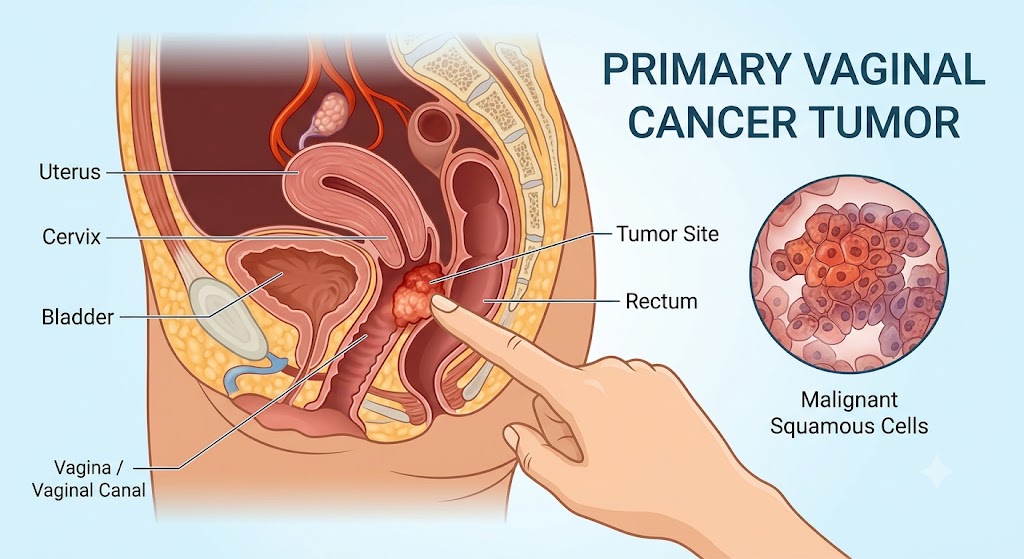
Vaginal cancer is a rare gynecological malignancy that forms in the cells of the vagina—the muscular canal connecting the uterus to the external genitals. Because it often progresses without noticeable early signs, routine pelvic examinations and screening are vital for prompt detection.
With modern oncological advances, including precision radiation techniques, robotic-assisted surgical resections, and targeted therapies, effective treatment and organ preservation are achievable. Timely evaluation by an experienced surgical oncologist significantly improves clinical outcomes and quality of life.
Understanding Vaginal Cancer
Vaginal cancer develops when healthy cells in the vaginal canal undergo genetic alterations and multiply uncontrollably. While secondary vaginal cancer (cancer that has metastasized from adjacent organs like the cervix, uterus, or rectum) is more common, primary vaginal cancer originates directly within the vaginal tissue itself.
Persistent infection with high-risk strains of Human Papillomavirus (HPV) is a primary risk factor, alongside previous cervical precancer or cancer. Because the vaginal wall is thin and rich in lymphatic drainage, early diagnosis is essential to prevent tumor cells from invading deeper pelvic structures or regional lymph nodes.
Types of Vaginal Cancer
Vaginal cancer is classified based on the histological cell type from which it originates:
Squamous Cell Carcinoma: The most prevalent form, accounting for roughly 80% to 90% of all primary vaginal cancers. It arises in the flat, thin squamous cells lining the vaginal surface, most frequently in the upper third of the canal.
Adenocarcinoma: Originates in the glandular cells of the vaginal lining. It accounts for about 10% of cases and tends to occur in women over 50, though a rare subtype (clear cell adenocarcinoma) was historically linked to in-utero exposure to diethylstilbestrol (DES).
Vaginal Melanoma: A very rare malignancy arising from the pigment-producing melanocytes, usually located in the lower or outer part of the vagina.
Vaginal Sarcoma: An uncommon form that originates deep within the connective tissue or muscle layers of the vaginal wall (e.g., embryonal rhabdomyosarcoma or leiomyosarcoma).
Signs and Symptoms of Vaginal Cancer
Early-stage vaginal lesions often cause no discomfort. As the disease develops, common symptoms include:
Abnormal vaginal bleeding (especially post-coital bleeding, bleeding between menstrual periods, or post-menopausal bleeding)
Watery, foul-smelling, or blood-tinged vaginal discharge
A palpable mass or lump in the vagina
Painful sexual intercourse (dyspareunia)
Pelvic pain or persistent ache in the lower abdomen
Difficult or painful urination (dysuria), frequent urination, or blood in the urine
Constipation, tenesmus, or rectal pain (in advanced stages with posterior pelvic extension)
Don't Ignore The Signs!
Consult Vaginal Cancer Specialist in Patna if you experience any
Vaginal Cancer Symptoms.
Diagnosis of Vaginal Cancer
Accurate evaluation requires a multi-step diagnostic approach:
-
Comprehensive Pelvic Examination: Thorough visual and manual inspection of the external genitalia, vaginal canal, and cervix using a speculum.
-
Colposcopy: Examination using a lighted, magnifying colposcope to closely evaluate abnormal mucosal areas throughout the entire vaginal vault.
-
Vaginal Biopsy: Surgical sampling of suspicious tissue for definitive histopathological analysis to determine cell type and grade.
-
High-Resolution Pelvic MRI: Provides tissue contrast to evaluate the depth of vaginal wall invasion, parametrial involvement, and sphincter margins.
-
PET-CT Scan: Assesses pelvic and inguinal lymph node involvement as well as distant metastatic spread.
-
Endoscopic Evaluation (Cystoscopy & Proctosigmoidoscopy): Performed in locally advanced cases to confirm whether the tumor involves the bladder or rectum.
Treatment of Vaginal Cancer
Treatment strategies depend on the exact anatomical location, tumor size, histological subtype, and cancer stage:
-
Radiation Therapy: The primary treatment modality for most stages of vaginal cancer.
-
External Beam Radiation Therapy (EBRT): Targets the vagina, parametrium, and regional pelvic and groin lymph nodes.
-
Brachytherapy (Internal Radiation): Specialized intracavitary or interstitial applicators are placed directly inside or around the vaginal tumor, delivering high doses to the lesion while sparing the adjacent bladder and rectum.
-
-
Surgical Interventions:
-
Local Excision: Removal of small, superficial, or precancerous (VAIN) lesions with clear margins.
-
Vaginectomy (Partial or Radical): Surgical removal of part or all of the vagina, often performed alongside pelvic lymph node dissection.
-
Minimally Invasive & Robotic Surgery: Employed for lymphadenectomy or radical pelvic resection with minimal tissue trauma and faster recovery.
-
Reconstructive Vaginal Surgery: Neovaginal reconstruction can be performed following surgery to restore anatomical function.
-
-
Chemotherapy & Chemoradiation: Low-dose chemotherapy (such as cisplatin) given concurrently with radiation to act as a radiosensitizer, enhancing tumor destruction in locally advanced cases.
-
Targeted Therapy & Immunotherapy: Systemic options tailored for advanced, recurrent, or metastatic cases where conventional treatments have been exhausted.
-
Palliative Care: Comprehensive management of pain, lymphedema, and pelvic symptoms to preserve patient dignity and quality of life.
Don’t Ignore The Signs!
Consult a Vaginal Cancer Specialist in Patna if you experience unusual vaginal bleeding, discharge, or pelvic discomfort.
Conclusion
Vaginal cancer requires precise, multidisciplinary oncology care to achieve tumor control while preserving vital anatomical and urinary-bowel functions. By combining advanced radiation techniques like brachytherapy, laparoscopic and robotic surgical expertise, and personalized medical oncology protocols, we provide individualized care tailored to every stage of disease. Prompt medical consultation at the earliest sign ensures the highest probability of cure and recovery.